

Why Engineering Recruitment Takes Longer Than You Think
An Executive Guide for CEOs, CHROs & Global Expansion Leaders Hiring Engineering Talent in India
Executive Summary
Engineering talent is one of the world’s most valuable business assets, yet many organizations underestimate how long it takes to hire the right professionals. Executives often approve headcount assuming recruitment will be completed within a few weeks. In reality, specialist engineering roles frequently remain open for two to four months because of skill shortages, competitive offers, lengthy interview processes, and compliance requirements. Recent industry analyses also point to increasing competition for experienced engineers and longer hiring cycles for specialist technical positions.
For global companies expanding into India, recruitment becomes even more complex. Hiring software engineers, AI specialists, semiconductor professionals, automotive engineers, or manufacturing experts involves more than sourcing candidates. It requires understanding local talent markets, compensation expectations, notice periods, employment compliance, and onboarding processes.
This executive guide explains why engineering recruitment takes longer than expected, the hidden financial impact of hiring delays, and practical strategies to accelerate hiring through Employer of Record (EOR) Services in India, remote hiring models, and experienced Recruitment Consultants in India.
Table of Contents
- Why Engineering Hiring Has Changed
- The Real Reasons Engineering Recruitment Takes Longer
- The Hidden Cost of Hiring Delays
- Engineering Hiring Timeline Breakdown
- Cost Comparison: Vacancy vs Recruitment Investment
- Decision Framework: Internal Hiring vs Recruitment Partner vs EOR
- Executive Hiring Checklist
- Real Business Scenario
- Why Companies Choose MM Enterprises
- Download the Executive Engineering Hiring Playbook
Why Engineering Recruitment Is No Longer a Simple Hiring Exercise
Many executives still assume that a large engineering workforce automatically translates into quick hiring.
The reality is very different.
Today’s engineering recruitment focuses on finding professionals with proven expertise in:
- Artificial Intelligence
- Machine Learning
- Embedded Systems
- Semiconductor Design
- Robotics
- Cloud Engineering
- DevOps
- Cybersecurity
- Automotive Engineering
- Product Development
Although India produces a large engineering workforce, employers increasingly prioritize demonstrated skills, practical experience, and business readiness over academic credentials alone. (The Times of India)
The Seven Reasons Engineering Recruitment Takes Longer
1. Specialized Skills Are Scarce
General software developers may be plentiful.
Experienced engineers in AI infrastructure, chip design, functional safety, industrial automation, or cloud architecture are not.
Recruiters often spend weeks identifying candidates who possess both technical capability and industry experience.
2. Every Employer Wants the Same Talent
Global Capability Centers (GCCs), multinational corporations, startups, and consulting firms frequently compete for the same engineering professionals.
Competition is particularly intense in:
| Engineering Area | Competition Level |
| Artificial Intelligence | Very High |
| Cloud Engineering | Very High |
| Cybersecurity | High |
| Semiconductor | Very High |
| Embedded Systems | High |
| Automotive Software | High |
| Product Engineering | Very High |
Growing GCC investment continues to intensify competition for experienced engineering talent, even as hiring strategies become more selective. (Reuters)
3. Long Notice Periods
One of the biggest reasons international companies underestimate hiring timelines is notice periods.
Many experienced engineers cannot join immediately.
Typical timelines include:
- 30 days
- 60 days
- 90 days
Even after accepting an offer, project delivery may not begin for several months.
4. Multiple Interview Rounds Slow Decisions
Engineering recruitment often includes:
- HR screening
- Technical assessment
- Coding interview
- Architecture interview
- Leadership interview
- Cultural fit discussion
- Executive approval
Every additional interview increases scheduling complexity.
5. Counter Offers Are Common
Senior engineers frequently receive counter offers after resigning.
Without proactive candidate engagement, organizations risk restarting the recruitment process.
6. Global Hiring Creates Additional Complexity
International employers must also consider:
- Employment contracts
- Payroll setup
- Compliance
- Data security
- Background verification
- Cross-border onboarding
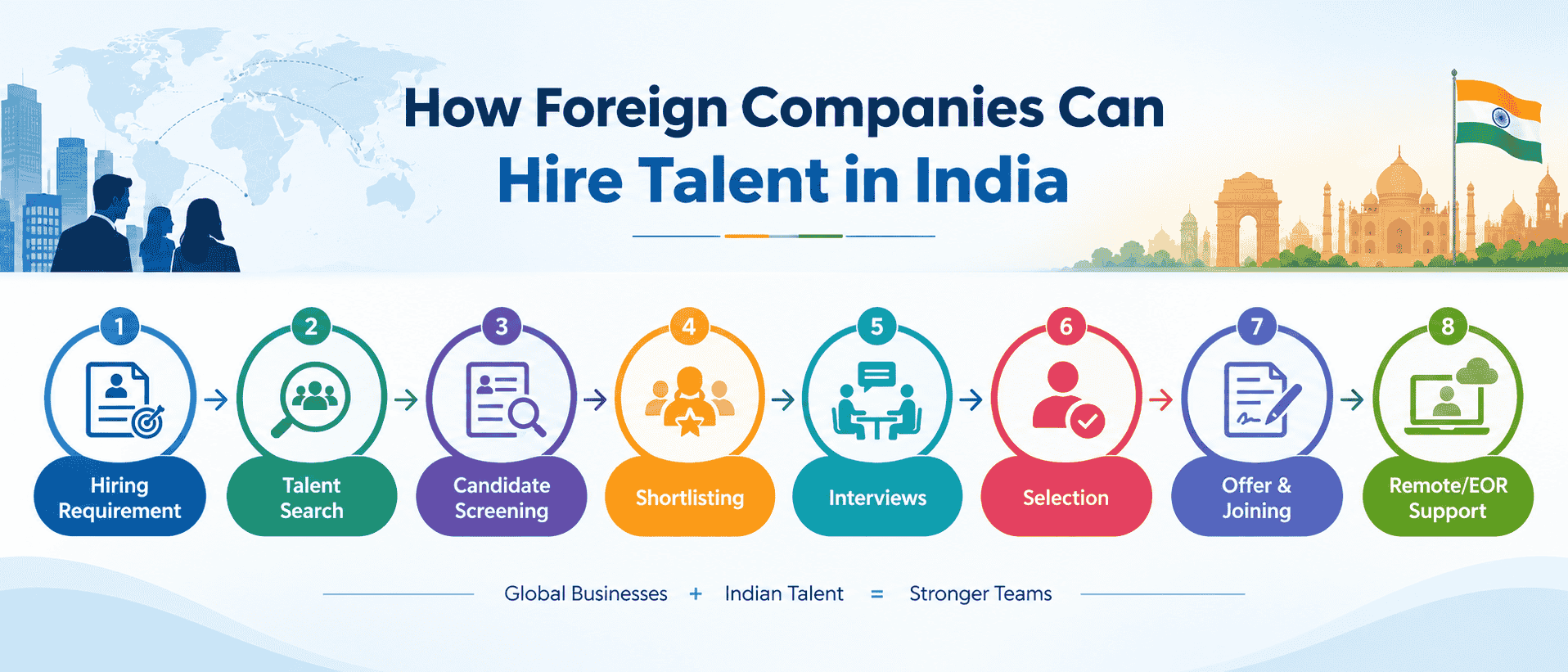
Using Employer of Record (EOR) Services in India can simplify these operational steps while allowing businesses to hire without establishing a local legal entity.
7. Hiring Managers Delay Decisions
Technical managers are often balancing product delivery with recruitment responsibilities.
Delayed interview feedback frequently extends hiring cycles more than candidate availability.
Engineering Hiring Timeline
| Recruitment Stage | Typical Duration |
| Workforce Planning | 5–10 Days |
| Candidate Sourcing | 15–25 Days |
| Technical Interviews | 10–20 Days |
| Offer Negotiation | 5–10 Days |
| Candidate Notice Period | 30–90 Days |
| Onboarding | 5–10 Days |
Total Timeline: Approximately 65–165 days, depending on role complexity and market conditions.
The Financial Cost of Hiring Delays
Recruitment delays affect much more than HR metrics.
Business consequences include:
- Delayed software releases
- Reduced engineering capacity
- Lost revenue opportunities
- Increased contractor costs
- Team burnout
- Slower innovation
- Missed customer commitments
For technology companies, a delayed engineering hire can postpone product milestones and revenue recognition.
Vacancy Cost vs Recruitment Investment
| Cost of Vacancy | Cost of Faster Recruitment |
| Delayed projects | Recruitment partner fees |
| Lost revenue | Employer branding |
| Overtime expenses | Technical assessments |
| Customer dissatisfaction | Faster onboarding |
| Lower productivity | Recruitment technology |
When viewed from a business perspective, reducing hiring delays often delivers a stronger return than minimizing recruitment costs.
Decision Framework
Which Hiring Model Fits Your Business?
| Business Objective | Internal HR | Recruitment Consultant | Employer of Record |
| Hire 2–10 Engineers | Limited | ✔✔ | ✔✔✔ |
| Rapid Market Entry | ✖ | ✔ | ✔✔✔ |
| Remote Hiring | Limited | ✔✔ | ✔✔✔ |
| Build GCC | ✔ | ✔✔✔ | Limited |
| Compliance Support | Limited | Limited | ✔✔✔ |
| Payroll Management | Internal | ✖ | ✔✔✔ |
How Employer of Record (EOR) Services Reduce Hiring Delays
For international businesses, hiring engineers often stalls because legal entity setup, payroll registration, and employment compliance take time.
An Employer of Record (EOR) Services in India solution enables companies to:
- Hire engineers legally without establishing an entity
- Accelerate onboarding
- Manage payroll and statutory compliance
- Support remote engineering teams
- Reduce administrative workload
This allows leadership teams to focus on product development and business growth rather than local employment administration.
When Recruitment Consultants Add the Most Value
Experienced Recruitment Consultants in India become particularly valuable when hiring:
- Software Architects
- AI Engineers
- Data Scientists
- Embedded Engineers
- Semiconductor Specialists
- Automotive Engineers
- Engineering Managers
- Plant Heads
- R&D Professionals
Their market knowledge, passive talent networks, and technical screening capabilities can significantly improve hiring quality and reduce search time.
Executive Hiring Checklist
Before launching engineering recruitment, ask:
| Question | ✓ |
| Have critical skills been clearly defined? | □ |
| Is the compensation benchmark competitive? | □ |
| Have interview stages been simplified? | □ |
| Are hiring managers aligned on requirements? | □ |
| Is the onboarding process ready? | □ |
| Do we need an Employer of Record? | □ |
| Should we engage Recruitment Consultants in India? | □ |
| Are hiring KPIs being tracked? | □ |
Real Business Scenario
European SaaS Company Expanding into India
A European software company planned to hire 15 cloud engineers within four months.
Initially, recruitment was managed from headquarters.
After eight weeks:
- Only three candidates had reached the final interview.
- Two accepted competing offers.
- Product delivery timelines slipped.
- Internal engineering managers were spending excessive time interviewing instead of leading development.
The company revised its approach by partnering with specialist Recruitment Consultants in India and using Employer of Record (EOR) Services in India to onboard engineers without waiting for entity setup.
The result was a more predictable recruitment process, faster onboarding, and reduced administrative overhead.
Why Companies Choose MM Enterprises
Building engineering teams requires more than filling vacancies.
At MM Enterprises, we help international organizations identify, recruit, and onboard engineering professionals across software, manufacturing, automotive, electronics, infrastructure, energy, pharmaceuticals, and emerging technologies.
Our solutions include:
- Engineering Recruitment
- Executive Search
- Remote Hiring Solutions
- Employer of Record (EOR) Services in India
- Recruitment Process Outsourcing
- Talent Mapping
- Workforce Planning
- Global Hiring Support
Whether you’re building a GCC, expanding a product engineering team, or hiring your first employee in India, our consultants help reduce hiring delays while maintaining quality and compliance.
Download the Executive Engineering Hiring Playbook
Planning to build an engineering team in India?
Download our Engineering Hiring Playbook to access:
- Engineering hiring timeline templates
- Salary planning worksheets
- Interview process scorecards
- Offer acceptance checklist
- Remote hiring framework
- EOR vs Entity decision matrix
- Engineering workforce planning checklist
A structured hiring strategy helps organizations shorten recruitment cycles, improve candidate quality, and accelerate business growth in India’s competitive engineering talent market.