


Employer of record (EOR) services in 2026 – Why Founders, CFOs, and CHROs Are Switching to it.
The Fastest Way to Hire in India Without Entity Setup (And Avoid Costly Expansion Mistakes)
Let’s start with a reality most global companies are facing today:
Hiring globally is slow, complex, and risky, so the company shifted to Employer of record (EOR) services in 2026
You identify India as a high-growth market.
You find the right talent.
You’re ready to scale.
But then…
❌ The Real Problem: Global Hiring Is Broken
- Entity setup takes months
- Compliance requirements are complex and constantly changing
- Payroll errors can lead to legal penalties
- Hiring delays result in lost opportunities
And in a competitive global market:
Speed is not optional. It’s survival.
What Decision Makers Actually Want (And Why Traditional Hiring Fails Them)
On paper, global expansion sounds straightforward: identify a market, hire talent, start operations.
In reality?
Each decision-maker inside the organization is solving a different problem—and traditional hiring models fail to align with any of them.
Let’s break it down more deeply.
1. Founders → Speed Is Everything
Founders operate in execution mode.
They’re not asking:
❌ “What’s the most structured way to enter a market?”
They’re asking:
“How fast can we start generating revenue in this market?”
What Founders Need:
- Immediate hiring capability
- Fast team deployment
- Quick market validation
Where Traditional Hiring Fails:
- Entity setup delays (3–6 months)
- Legal approvals slow down onboarding
- Operational setup kills momentum
Impact:
- Competitors enter first
- Opportunities are missed
- Growth slows down
What Actually Works:
A model that allows:
✔ Hiring in days
✔ Zero setup delay
✔ Instant execution
Because for founders:
Speed is not an advantage—it’s survival
2. CFOs → Cost Control & Predictability
CFOs don’t just look at expansion.
They evaluate risk-adjusted cost efficiency
What CFOs Need:
- Predictable cost structures
- Minimal upfront investment
- No hidden legal or compliance risks
Where Traditional Hiring Fails:
- High entity setup costs
- Ongoing legal and consulting fees
- HR infrastructure investment
- Unexpected compliance penalties
Impact:
- Budget overruns
- Financial uncertainty
- Reduced ROI on expansion
What CFOs Actually Want:
✔ Convert fixed costs → variable costs
✔ Pay only for active workforce
✔ Eliminate compliance surprises
Because for CFOs:
Control is not about cutting costs—it’s about eliminating waste and risk
3. CHROs → Talent Without Boundaries
CHROs are under pressure to:
Build high-performing teams—fast
What CHROs Need:
- Access to global talent pools
- Scalable hiring models
- Strong employee experience
Where Traditional Hiring Fails:
- Limited to local hiring
- Slow onboarding processes
- Fragmented HR systems
- Poor employee experience due to delays
Impact:
- Loss of top candidates
- Weak talent pipelines
- High attrition
What CHROs Actually Want:
✔ Hire from anywhere
✔ Onboard quickly
✔ Ensure smooth employee experience
Because for CHROs:
Talent is the real competitive advantage—not location
4. Expansion Leaders → Risk Is the Real Enemy
Expansion leaders are accountable for one thing:
Entering new markets without failure
What They Need:
- Full legal compliance
- Zero regulatory exposure
- Smooth operational execution
Where Traditional Hiring Fails:
- Complex labor laws
- Multi-layered tax regulations
- High compliance risk
- Lack of local expertise
Impact:
- Legal penalties
- Delayed operations
- Reputational damage
What Expansion Leaders Actually Want:
✔ Risk-free market entry
✔ Compliance from day one
✔ Local expertise without complexity
Because for them:
One compliance mistake can cost more than the entire expansion
⚠️ The Core Problem: Misalignment
Here’s the real issue:
Traditional hiring models are built for:
- Stability
- Local operations
- Long-term structures
But modern businesses need:
- Speed
- Flexibility
- Global scalability
The Result?
| Role | What They Want | What They Get (Traditional Model) |
| Founder | Speed | Delays |
| CFO | Cost control | High fixed costs |
| CHRO | Talent access | Limited hiring |
| Expansion Leader | Risk reduction | Compliance exposure |
This mismatch is what slows companies down
The Strategic Insight
Companies that succeed globally don’t just improve hiring.
They change the hiring model itself
They move from:
❌ Entity-based hiring
❌ Slow, rigid systems
❌ High-risk expansion
To:
✅ Flexible workforce models
✅ Fast, compliant hiring
✅ Scalable global teams
✅ The Solution: Employer of Record (EOR) Services in India
This is where an Employer of record services company changes everything.
Instead of setting up a legal entity in India…
You partner with an EOR provider who legally employs talent on your behalf.
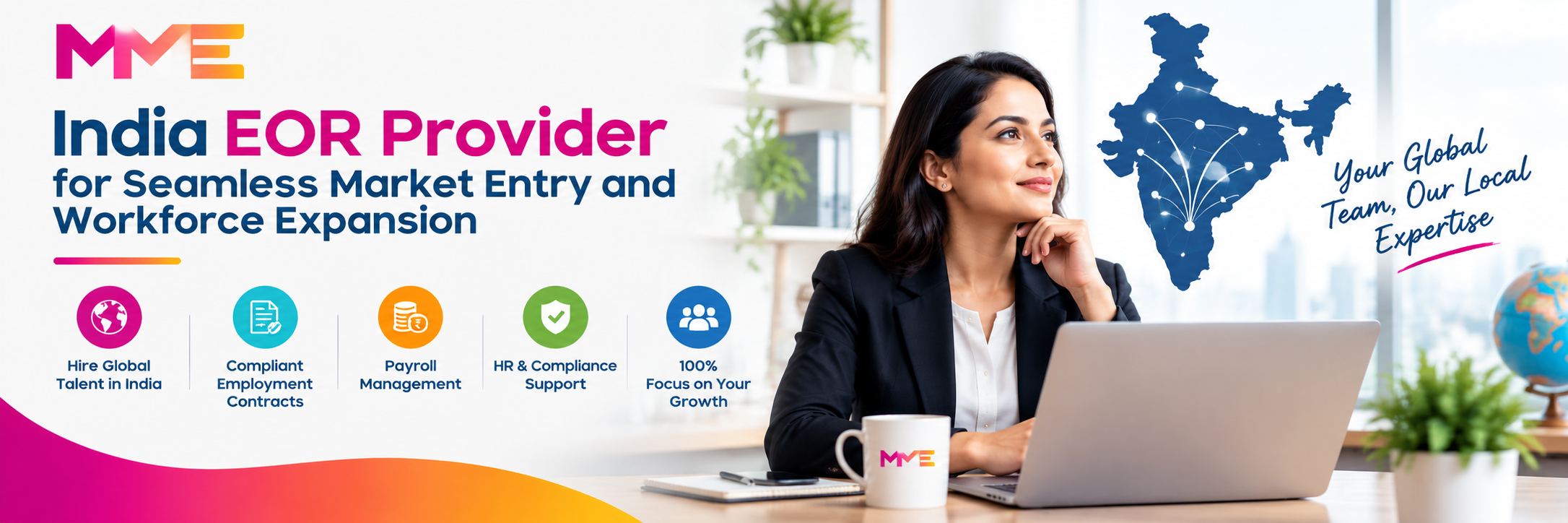
What EOR Services in India Actually Do
An EOR handles:
- Payroll management
- Tax compliance
- Employment contracts
- Statutory filings
- Labor law adherence
Which means:
You can hire employees in India without entity setup
The Outcome: 10x Faster Hiring + 80% Less Risk
This isn’t theory. It’s execution.
⚡ 1. Speed: Hire in Days, Not Months
- No company registration delays
- Immediate onboarding capability
- Faster go-to-market execution
From idea to team—in days
2. Cost Efficiency: Smart Financial Control
With EOR:
- No entity setup costs
- No heavy legal fees
- No HR infrastructure investment
Fixed costs → variable, scalable costs
⚠️ 3. Risk Reduction: Stay Fully Compliant
EOR ensures:
- Accurate tax handling
- Labor law compliance
- Proper employment classification
Avoid:
❌ Legal penalties
❌ Payroll mistakes
❌ Compliance gaps
4. Access to Global Talent (India Advantage)
India offers:
- Skilled engineers
- Finance professionals
- Tech and AI experts
- Multilingual workforce
With EOR:
You can hire across India—without operational complexity
Why This Matters More in 2026
Global hiring is no longer about if you expand.
It’s about how fast and how safely you can do it
Companies that delay:
- Lose top talent
- Enter markets late
- Fall behind competitors
Companies using global hiring solutions like EOR:
✔ Move faster
✔ Scale smarter
✔ Reduce risk
The Strategic Shift: From Operational Drag to Scalable Growth
Most companies don’t realize this early enough:
Global expansion isn’t limited by opportunity. It’s limited by the model you choose.
And right now, there are two very different models in play.
❌ The Old Model: Entity-First Expansion
This is the traditional route companies have followed for decades.
Step-by-Step Reality:
- Set Up a Legal Entity
- Register company in India
- Open bank accounts
- Handle approvals and documentation
- ⏳ Timeline: 3–6 months (sometimes more)
- Build HR & Operational Infrastructure
- Hire HR team
- Set up payroll systems
- Engage legal and compliance consultants
- Cost: High upfront investment
- Navigate Compliance Manually
- Understand central + state labor laws
- Manage PF, ESI, TDS filings
- Track regulatory updates
- ⚠️ Risk: High (errors are common and costly)
- Start Hiring (Finally)
- After months of setup
- With limited flexibility
The Hidden Costs of the Old Model
- Delayed market entry
- Lost talent (candidates don’t wait)
- High fixed costs before revenue
- Compliance exposure
Net Effect:
You spend months preparing… instead of growing.
✅ The New Model: EOR-Led Expansion
Now compare that with a modern approach:
Using EOR services in India
What Changes?
1. No Entity Setup Required
- No company registration
- No legal delays
- No infrastructure build
You can hire employees in India without entity setup
2. Immediate Hiring Capability
- Identify talent
- Issue compliant contracts
- Onboard in days
From decision → execution in days, not months
3. Automated Compliance
EOR providers handle:
- Labor law compliance
- Payroll processing
- Tax filings
- Statutory requirements
Result:
✔ Reduced legal risk
✔ No compliance headaches
✔ Peace of mind for leadership
4. Flexible Workforce Scaling
- Scale from 1 to 100+ employees
- Expand across multiple cities
- Adjust team size based on business needs
No long-term operational lock-in
⚖️ Old vs New: The Real Comparison
| Factor | Old Model | EOR Model |
| Time to Hire | 3–6 months | Few days |
| Setup Cost | High | Minimal |
| Compliance Risk | High | Managed |
| Flexibility | Low | High |
| Speed to Market | Slow | Fast |
The difference is not small.
It’s the difference between delay and dominance
Why This Shift Matters More in 2026
We’re no longer in a slow-growth business environment.
Today’s reality:
- Markets move fast
- Talent is global
- Competition is aggressive
What This Means:
- The company that hires first → wins talent
- The company that enters first → wins market share
- The company that executes faster → scales faster
And traditional models can’t keep up.
EOR Is Not an HR Tool—It’s a Growth Engine
Let’s reframe this.
EOR is often misunderstood as:
❌ A payroll solution
❌ A compliance service
❌ An HR outsourcing model
That’s outdated thinking.
What EOR Really Is:
A market entry accelerator
A risk management system
A scalable hiring infrastructure
For Decision Makers:
- Founders → Faster launch
- CFOs → Lower cost, predictable spend
- CHROs → Access to global talent
- Expansion leaders → Zero compliance risk
One solution. Multiple strategic outcomes.
Real Business Impact
Companies using EOR don’t just improve hiring.
They:
✔ Enter markets faster
✔ Hire better talent
✔ Reduce operational risk
✔ Scale without friction
They move from:
Planning mode → Execution mode
Why Companies Trust MM Enterprises – Employer of record (EOR) services in 2026
When it comes to India, execution matters.
What Makes MM Enterprises Employer of record (EOR) services in 2026 as Different
✔ Deep India Compliance Expertise
Navigate complex labor laws with confidence
✔ Fast Hiring Capability
Hire employees in India without entity setup—within days
✔ End-to-End Workforce Solutions
- Recruitment
- Payroll outsourcing India
- Compliance management
✔ Scalable Hiring Models
From 1 to 100+ employees—without friction
This is where strategy meets execution.
Who Benefits the Most from Employer of record (EOR) services in 2026?
Founders
Launch faster and enter markets ahead of competitors
CFOs
Control costs and avoid unnecessary investments
CHROs
Build global teams with access to top talent
Expansion Leaders
Reduce compliance risk and ensure smooth entry
⚠️ What Happens If You Don’t Use Employer of record (EOR) services in 2026?
Let’s be clear:
❌ Delayed hiring
❌ Increased legal exposure
❌ Higher operational costs
❌ Lost market opportunities
The cost of doing nothing is often higher than the cost of action.
“How to Hire Employees in India Without Setting Up a Company by Employer of record (EOR) services in 2026”
Book a consultation:
Build your India expansion roadmap
Final Insight
This is the shift happening right now:
From:
❌ Slow, rigid, entity-based expansion
❌ High cost + high risk
❌ Delayed hiring cycles
To:
✅ Fast, flexible, EOR-driven expansion
✅ Lower cost + lower risk
✅ Instant hiring capability
And companies that adopt this shift early?
They don’t just compete globally—they lead.
Closing Line
“The companies that win in 2026 aren’t the ones with the best strategy—
they’re the ones who execute fastest with the least risk.”
Because today—
Hiring is not just HR.
It’s your competitive advantage.