


C-Suite & Senior Executive Recruitment Services: Building Leadership That Drives Real Growth
In today’s fast-evolving business landscape, companies don’t fail because they lack talent—they struggle because they lack the right leadership. Hiring at the top level isn’t just about filling positions; it’s about shaping the future of an organization.
That’s where C-Suite & Senior Executive Recruitment Services step in—not as a hiring function, but as a strategic growth enabler.
Whether you’re scaling a startup, expanding globally, or transforming your leadership team, the importance of structured Executive Search and Executive Recruitment Search has never been greater.
This blog explores how modern executive hiring works, why traditional methods fall short, and how organizations can build leadership teams that truly move the needle.
Why C-Suite Hiring Is No Longer “Just Hiring”
Hiring a CEO, CTO, CFO, or VP today is fundamentally different from hiring even five years ago.
The expectations are higher:
- Leaders must be strategic thinkers + operators
- They must adapt quickly to market shifts
- They must drive innovation, culture, and scale simultaneously
A wrong hire at this level doesn’t just delay progress—it can:
- Cost millions in lost opportunity
- Disrupt team morale
- Stall organizational growth
This is why companies are moving towards specialized C-Suite & Senior Executive Recruitment Services rather than relying on traditional hiring models.
What Makes Executive Search Different?
Unlike mid-level hiring, Executive Search is not about volume—it’s about precision.
Traditional Hiring vs Executive Search
| Traditional Hiring | Executive Search |
| Job posting-based | Network-driven |
| Active candidates | Passive leadership talent |
| Short-term hiring | Long-term strategic alignment |
| Speed-focused | Fit-focused |
Executive roles demand:
- Deep industry understanding
- Leadership capability assessment
- Cultural alignment
- Long-term vision compatibility
This is why companies partner with firms like MM Enterprises that go beyond resumes and focus on leadership impact.
The Rise of Strategic Executive Recruitment in India
India has emerged as a global leadership hub due to:
- A strong talent ecosystem
- Cost-effective leadership hiring
- Increasing global business presence
Organizations worldwide are now leveraging Executive Recruitment Search in India to:
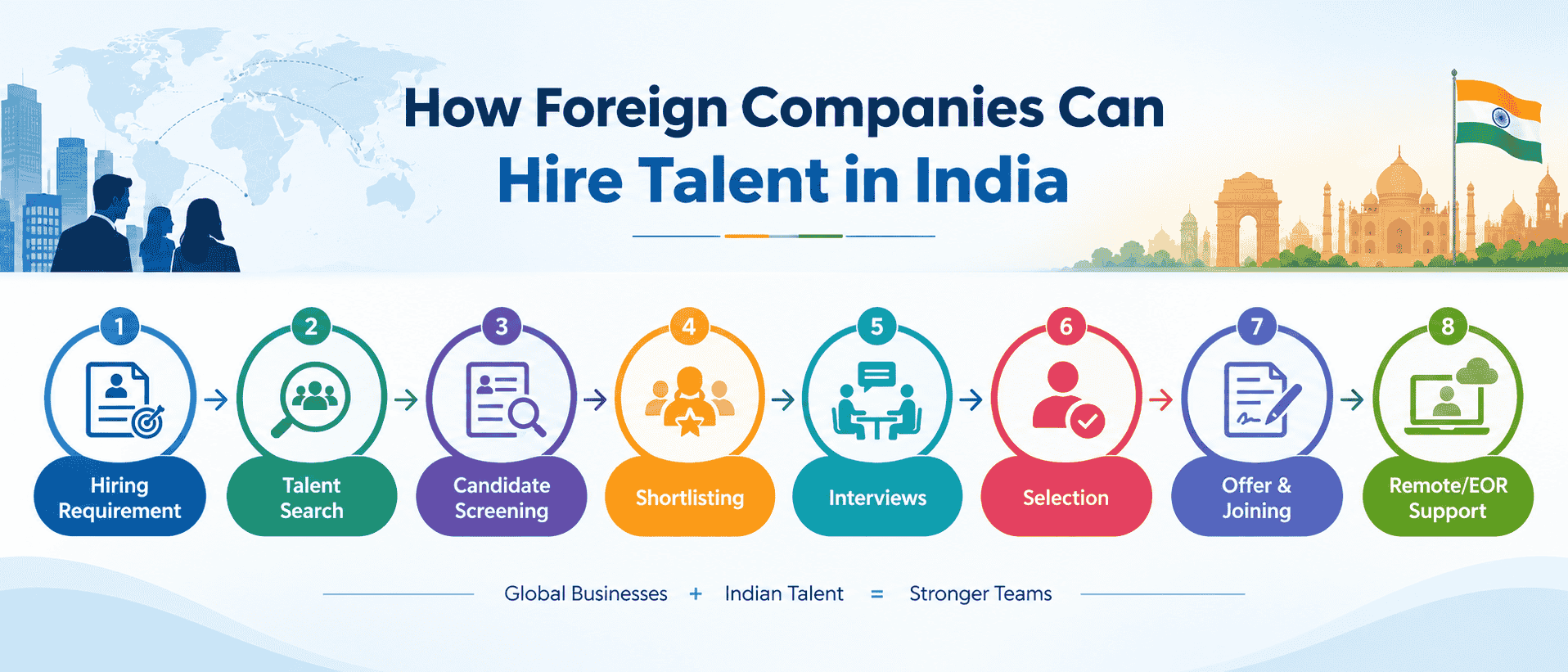
- Build offshore leadership teams
- Hire India-based CXOs for global roles
- Expand operations with local expertise
To understand broader hiring trends shaping leadership roles, explore insights on HR Blog by MM Enterprises.
Key Roles Covered in C-Suite & Senior Executive Recruitment (Expanded Insight)
Modern organizations don’t just hire leaders—they build multi-layered leadership ecosystems. Each executive role carries a distinct mandate, requires a unique competency mix, and demands a tailored Executive Search strategy.
This is why C-Suite & Senior Executive Recruitment Services go far beyond generic hiring—they align leadership capabilities with business vision, growth stage, and market dynamics.
Let’s break this down in depth.
1. Core C-Suite Roles: The Strategic Backbone
These are the decision-makers at the highest level, responsible for defining direction, driving transformation, and ensuring long-term sustainability.
Chief Executive Officer (CEO)
The CEO is not just the face of the company—they are the architect of vision and culture.
Key Responsibilities:
- Defining long-term strategy
- Driving revenue growth and profitability
- Building leadership teams
- Managing investor and stakeholder relationships
What Makes CEO Hiring Complex:
- Requires alignment with board expectations
- Needs a balance of vision + execution
- Cultural influence is critical
Executive Search Strategy:
- Deep market mapping across competitors
- Focus on proven scale experience
- Leadership psychometric and behavioral evaluation
Chief Technology Officer (CTO)
The CTO drives technology vision and innovation, especially critical in today’s digital-first economy.
Key Responsibilities:
- Building scalable tech architecture
- Leading engineering teams
- Driving innovation and digital transformation
- Aligning tech with business goals
Hiring Challenges:
- Scarcity of leaders who can scale systems and teams
- Balancing technical depth with leadership capability
Executive Recruitment Approach:
- Target candidates from high-growth tech environments
- Evaluate system design thinking and scalability experience
- Assess leadership in distributed teams
Chief Financial Officer (CFO)
The CFO is the financial strategist, ensuring fiscal discipline and growth sustainability.
Key Responsibilities:
- Financial planning and forecasting
- Risk management and compliance
- Investor relations
- Capital allocation
Hiring Complexity:
- Requires trust, accuracy, and strategic foresight
- Must align with growth stage (startup vs enterprise)
Search Strategy:
- Industry-specific financial expertise
- Experience in fundraising, IPOs, or restructuring
- Strong governance background
Chief Operating Officer (COO)
The COO translates strategy into execution.
Key Responsibilities:
- Operational efficiency
- Process optimization
- Cross-functional alignment
- Scaling operations
Hiring Challenges:
- Needs deep operational experience
- Must complement CEO’s leadership style
Executive Search Focus:
- Proven track record in scaling operations
- Experience in similar business models
- Strong execution mindset
2. Strategic Leadership Roles: The Execution Drivers
These roles sit just below the C-suite but are equally critical—they ensure that strategy turns into measurable outcomes.
Vice Presidents (VPs)
VPs lead key functions like:
- Engineering
- Sales
- Marketing
- HR
Their Role:
- Bridge between strategy and execution
- Lead large teams
- Deliver business outcomes
Hiring Approach:
- Focus on domain expertise + leadership capability
- Evaluate team-building and performance management skills
Directors & Senior Managers
These leaders are responsible for day-to-day execution excellence.
Responsibilities:
- Managing teams and projects
- Driving KPIs and performance metrics
- Supporting strategic initiatives
Hiring Strategy:
- Strong functional expertise
- Proven ability to scale teams
- Execution consistency
Business Unit Heads
These are mini-CEOs within the organization.
Key Responsibilities:
- P&L ownership
- Market expansion
- Product/service growth
Hiring Complexity:
- Requires entrepreneurial mindset
- Must balance strategy + execution
Executive Search Focus:
- Experience managing independent business units
- Revenue ownership track record
Country Heads
Critical for companies expanding geographically.
Responsibilities:
- Market entry strategy
- Local team building
- Regulatory and compliance alignment
Hiring Challenges:
- Need local market expertise + global alignment
- Cultural adaptability
Search Strategy:
- Candidates with international exposure
- Strong local network and market understanding
3. Emerging Leadership Roles: The Future Drivers
As industries evolve, new leadership roles are emerging—focused on innovation, data, and growth acceleration.
Chief Digital Officer (CDO)
Drives digital transformation initiatives.
Responsibilities:
- Digitizing operations
- Enhancing customer experience
- Implementing new technologies
Hiring Focus:
- Digital-first mindset
- Experience in transformation projects
Chief Data Officer
Data is the new currency—and this role ensures it is used effectively.
Responsibilities:
- Data strategy and governance
- Analytics and insights
- AI/ML implementation
Hiring Challenges:
- Rare combination of technical + strategic skills
Executive Search Strategy:
- Candidates from data-driven organizations
- Strong analytics leadership experience
Chief Growth Officer (CGO)
Focused purely on business growth and revenue acceleration.
Responsibilities:
- Growth strategy
- Customer acquisition
- Market expansion
Hiring Approach:
- Performance-driven leaders
- Strong marketing + sales alignment
Why Each Role Needs a Different Executive Search Strategy
Here’s the reality—you cannot hire a CEO the same way you hire a VP, and you cannot hire a CTO like a CFO.
Each role differs in:
- Skill requirements
- Leadership expectations
- Market availability
- Evaluation metrics
Example:
- CEO hiring = Vision + leadership alignment
- CTO hiring = Technical depth + scalability
- CFO hiring = Financial governance + strategy
- CGO hiring = Growth metrics + execution
The Role of Structured Executive Recruitment Search
This is where structured Executive Recruitment Search becomes critical.
Instead of a one-size-fits-all approach, it provides:
1. Role-Specific Talent Mapping
Identifying the right talent pools for each leadership function.
2. Customized Evaluation Frameworks
Assessing candidates based on:
- Role requirements
- Business goals
- Leadership style
3. Industry Benchmarking
Understanding:
- Compensation trends
- Leadership expectations
- Competitive landscape
4. Long-Term Fit Analysis
Ensuring:
- Cultural alignment
- Growth compatibility
- Leadership longevity
Hiring across C-Suite and senior leadership is not about filling roles—it’s about building a leadership engine that powers growth.
Each role—whether it’s a CEO shaping vision, a CTO driving innovation, or a CGO accelerating revenue—requires:
- A distinct hiring lens
- A tailored search strategy
- A structured recruitment approach
This is exactly why companies investing in C-Suite & Senior Executive Recruitment Services consistently outperform those relying on traditional hiring.
Because in the end, great companies are built by great leaders—and great leaders are hired through great strategy.
Why Companies Are Moving Away from Traditional Hiring Models
Many companies still rely on:
- Internal HR teams
- Job portals
- Referrals
While these methods work for mid-level roles, they fall short for leadership hiring.
Key Limitations:
- Limited access to passive candidates
- Lack of leadership assessment frameworks
- Poor cultural fit evaluation
- Reactive hiring approach
In contrast, professional C-Suite & Senior Executive Recruitment Services offer:
- Access to hidden talent pools
- Industry-specific expertise
- Strategic hiring frameworks
- End-to-end hiring ownership
The MM Enterprises Approach to Executive Hiring
Modern executive recruitment is not transactional—it’s consultative.
At MM Enterprises, the approach focuses on:
1. Understanding Business Goals
Before starting the search, the focus is on:
- Company vision
- Growth plans
- Leadership gaps
2. Market Mapping
Identifying:
- Competitor leadership talent
- Industry benchmarks
- Available and passive candidates
3. Leadership Assessment
Evaluating candidates based on:
- Strategic thinking
- Execution capability
- Cultural alignment
- Scalability mindset
4. Structured Hiring Process
Ensuring:
- Faster hiring cycles
- Better candidate quality
- Lower attrition
5. Long-Term Partnership
Not just hiring—but building leadership pipelines.
Industry Trends in Executive Recruitment (2026 and Beyond)
The landscape of Executive Search is rapidly evolving.
1. Shift Towards Data-Driven Hiring
Companies are using analytics to:
- Predict leadership success
- Assess behavioral patterns
- Improve hiring decisions
2. Global Hiring via EOR Models
Organizations are hiring executives in India using Employer of Record solutions.
Learn more about this model here:
Employer of Record Services in India
3. Hybrid Leadership Models
Companies are blending:
- Remote leadership
- On-ground executives
4. Focus on Cultural Fit
Skills alone are not enough—alignment with company culture is critical.
5. Speed + Precision Hiring
Organizations expect:
- Faster hiring cycles
- Zero compromise on quality
Why Structured Executive Recruitment Delivers Better Results
Companies that adopt structured hiring strategies see measurable benefits:
Real Impact:
- Faster hiring cycles
- Higher-quality leadership hires
- Reduced hiring risks
- Better retention rates
- Stronger organizational performance
For deeper insights into how executive hiring is evolving, read:
Redefining Executive Hiring in 2026
Executive Hiring Challenges (And How to Solve Them)
1. Talent Shortage at the Top
Solution: Access passive candidates through expert Executive Search firms.
2. Misalignment with Business Goals
Solution: Align hiring strategy with long-term vision.
3. High Attrition in Leadership Roles
Solution: Focus on cultural fit and long-term engagement.
4. Slow Hiring Process
Solution: Use structured and data-driven hiring models.
The Role of Employer Branding in Executive Hiring
Top leaders don’t just look for jobs—they look for:
- Vision
- Growth opportunities
- Strong company culture
Organizations must position themselves as:
- Innovative
- Growth-oriented
- Leadership-driven
This is where a strategic hiring partner plays a crucial role.
Why India Is a Hotspot for Executive Recruitment
India is becoming a preferred destination for leadership hiring because of:
- Large pool of experienced executives
- Strong tech and business ecosystem
- Cost-effective hiring
- Global exposure
Explore more on leadership hiring trends:
Senior Management Hiring in India 2026
C-Suite Hiring Through EOR: A Growing Trend
Companies expanding into India often face:
- Compliance challenges
- Legal complexities
- Hiring delays
EOR (Employer of Record) simplifies this process by:
- Managing compliance
- Handling payroll
- Enabling quick hiring
Learn more here:
C-Suite Hiring Solutions in India via EOR
How to Choose the Right Executive Recruitment Partner
Not all recruitment firms are equal. When choosing a partner, look for:
Key Factors:
- Proven industry experience
- Strong leadership network
- Structured hiring methodology
- Consultative approach
- Long-term partnership mindset
A firm like MM Enterprises acts as:
- Strategic hiring advisor
- Leadership partner
- Growth enabler
Future of C-Suite & Senior Executive Recruitment Services (In-Depth Perspective)
Executive hiring is entering a decisive new era. The old model—reactive, network-dependent, and intuition-led—is being replaced by a precision-driven, globally integrated, and insight-powered approach.
The future of C-Suite & Senior Executive Recruitment Services will not just be about identifying leaders—it will be about predicting leadership success, aligning it with business outcomes, and enabling long-term transformation.
Let’s unpack the key forces shaping this shift.
1. AI-Powered Talent Insights: From Instinct to Intelligence
Executive hiring has traditionally relied on experience, networks, and judgment. While those still matter, the future lies in augmenting human expertise with AI-driven intelligence.
What This Means:
AI is transforming how organizations:
- Identify high-potential leaders
- Analyze career trajectories
- Predict leadership performance
- Evaluate cultural fit
How It Works:
Modern Executive Search firms are leveraging:
- Behavioral analytics
- Leadership assessment algorithms
- Talent mapping platforms
- Predictive hiring models
Instead of asking:
“Is this candidate impressive?”
Companies are now asking:
“Is this candidate statistically and behaviorally aligned with success in this role?”
Real Impact:
- Reduced hiring bias
- Faster shortlisting
- Higher success rate in leadership hiring
2. Global Hiring Strategies: Leadership Without Borders
Geography is no longer a limitation in executive hiring.
Organizations are increasingly adopting global leadership acquisition strategies, hiring top executives regardless of location.
Key Drivers:
- Remote work normalization
- Access to global talent pools
- Cost optimization
- Market expansion needs
What This Looks Like:
Companies are:
- Hiring global CXOs in India
- Building distributed leadership teams
- Expanding into new markets with local executives
This is where models like Employer of Record (EOR) are becoming essential—enabling companies to hire internationally without setting up legal entities.
3. Remote Leadership Models: The Rise of Distributed CXOs
The idea that leaders must be physically present is rapidly fading.
The New Reality:
- CTOs leading fully remote engineering teams
- CFOs managing global finance operations virtually
- CEOs operating across multiple geographies
What’s Changing:
Executive roles are now defined by:
- Outcome ownership, not location
- Communication effectiveness
- Digital collaboration skills
Hiring Implications:
Executive Recruitment Search must now evaluate:
- Remote leadership capability
- Cross-cultural communication
- Ability to manage distributed teams
This adds a new layer of complexity—and opportunity.
4. Strong Employer Branding: The New Competitive Advantage
Top executives don’t apply for jobs—they choose companies.
And what influences that choice?
Employer brand.
What Leaders Look For:
- Vision clarity
- Market reputation
- Leadership culture
- Growth potential
The Shift:
Companies are moving from:
“We are hiring a leader”
to:
“We are attracting a leader”
Why It Matters:
In a competitive talent market:
- The best leaders have multiple opportunities
- Compensation alone is not enough
- Brand perception drives decision-making
Role of Recruitment Partners:
Modern C-Suite & Senior Executive Recruitment Services help companies:
- Position themselves effectively
- Craft compelling leadership narratives
- Communicate long-term vision
5. Data-Backed Decision-Making: Eliminating Guesswork
Executive hiring mistakes are costly—financially and strategically.
The future lies in data-backed hiring decisions.
What Data Is Being Used:
- Candidate performance metrics
- Leadership success patterns
- Industry benchmarking
- Compensation analytics
Benefits:
- More objective hiring decisions
- Better role-candidate alignment
- Reduced risk of mis-hiring
Example:
Instead of relying solely on interviews, companies now:
- Use structured assessment frameworks
- Compare candidates against success benchmarks
- Analyze long-term leadership impact potential
6. The Shift from Hiring to Leadership Planning
One of the biggest changes in executive recruitment is this:
Companies are no longer hiring leaders—they are planning leadership ecosystems.
What This Means:
Forward-thinking organizations are:
- Building leadership pipelines
- Planning succession strategies
- Identifying future CXOs early
Role of Executive Search Firms:
They are evolving into:
- Talent advisors
- Workforce strategists
- Long-term growth partners
7. Hyper-Specialization in Executive Recruitment
The future will also see highly specialized executive hiring.
Instead of generalist searches, companies will demand:
- Industry-specific expertise
- Function-specific leadership
- Context-driven hiring strategies
Example:
Hiring a CTO for:
- A SaaS startup ≠ Enterprise IT company ≠ AI-driven platform
Each requires a completely different evaluation lens.
8. Speed + Precision: The New Hiring Standard
Companies can no longer afford:
- Long hiring cycles
- Poor leadership decisions
The expectation is clear:
Hire faster—but hire right.
How This Is Achieved:
- Pre-built leadership talent pipelines
- Real-time market intelligence
- Structured hiring frameworks
What This Means for Companies
Organizations that adapt to these trends will gain a significant competitive edge.
They Will:
✔ Hire better leaders
✔ Build stronger leadership teams
✔ Reduce hiring risks
✔ Scale operations faster
✔ Enter new markets confidently
What Happens If Companies Don’t Adapt?
On the flip side, companies that stick to outdated hiring methods will face:
- Leadership gaps
- High attrition at senior levels
- Slow growth
- Poor strategic execution
In a leadership-driven economy, this can be a serious disadvantage.
Final Thoughts
C-Suite & Senior Executive Recruitment Services are no longer optional—they are essential.
In a world where leadership defines success, companies must:
- Move beyond traditional hiring
- Invest in structured Executive Search
- Partner with experts who understand leadership dynamics
The right leadership doesn’t just fill roles—it transforms organizations.
And that’s the real power of strategic Executive Recruitment Search.
Frequently Asked Questions (FAQs)
1. What are C-Suite & Senior Executive Recruitment Services?
These services focus on hiring top-level executives such as CEOs, CTOs, CFOs, and senior leadership roles through a structured and strategic hiring process.
2. How is Executive Search different from traditional recruitment?
Executive Search targets high-level, often passive candidates and focuses on long-term leadership fit, unlike traditional hiring which is more transactional.
3. Why should companies outsource executive recruitment?
Outsourcing provides access to:
- Wider talent networks
- Industry expertise
- Faster and better hiring outcomes
4. What industries benefit most from Executive Recruitment Search?
Industries like:
- Technology
- Manufacturing
- Healthcare
- Finance
- Startups & Enterprises
5. How long does executive hiring take?
Typically, 4–12 weeks depending on:
- Role complexity
- Market availability
- Hiring strategy
6. What is the cost of a wrong executive hire?
A wrong hire can cost:
- Financial losses
- Team disruption
- Strategic delays
7. Can companies hire global executives in India?
Yes, through models like EOR, companies can hire global leadership talent in India without setting up a local entity.
8. Why choose MM Enterprises for executive recruitment?
Because it offers:
- Strategic hiring solutions
- Deep industry expertise
- End-to-end recruitment support
- Proven leadership hiring success