
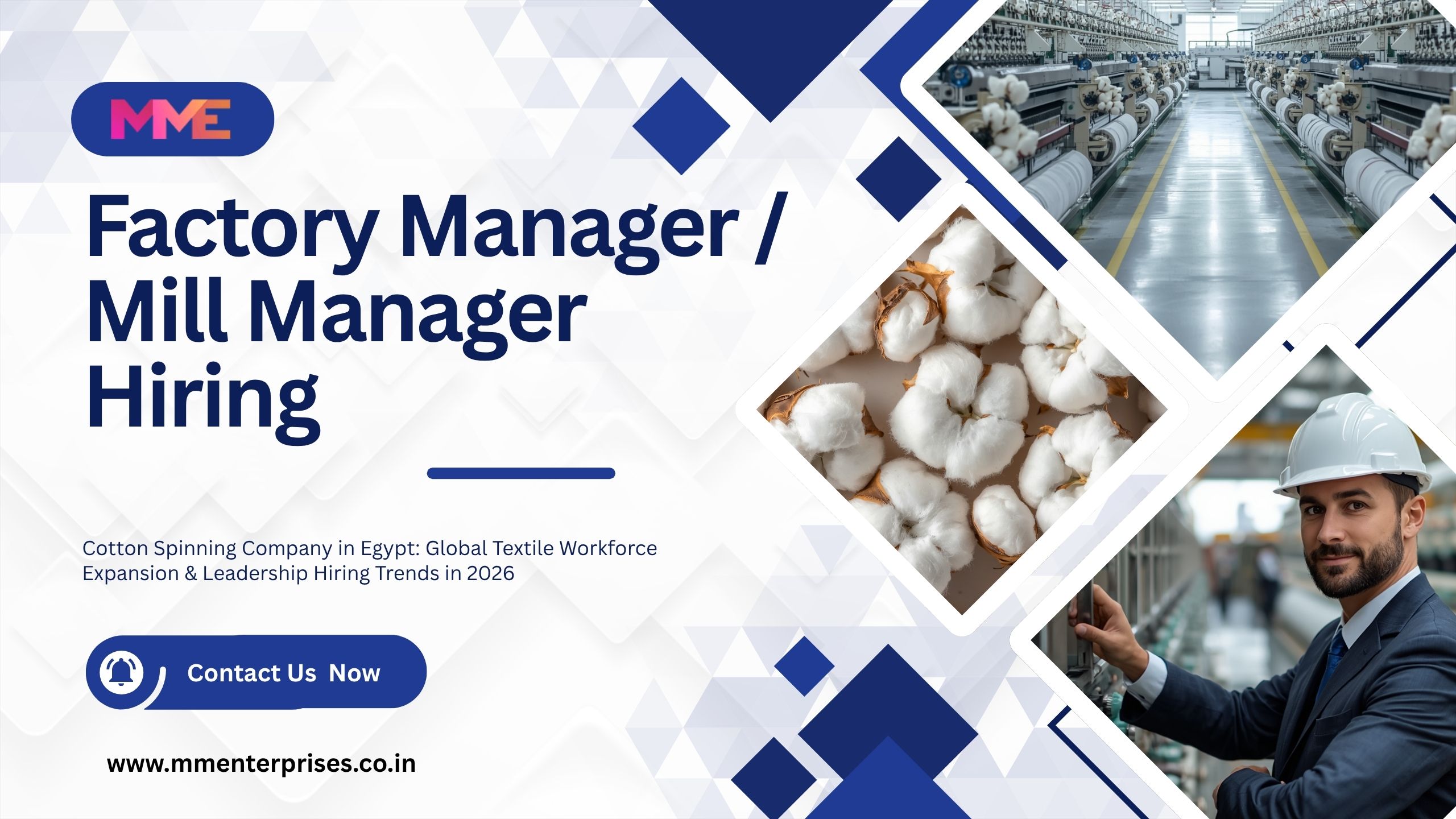
Factory Manager / Mill Manager Hiring for Cotton Spinning Company in Egypt: Global Textile Workforce Expansion & Leadership Hiring Trends in 2026
The global textile manufacturing industry is undergoing a major transformation in 2026.
- cotton spinning
- fine count yarn manufacturing
- spinning mill operations
- industrial maintenance
- workforce productivity
- factory modernization
- operational optimization
- quality management
- international manufacturing expansion
Job Opening — Factory Manager / Mill Manager for Cotton Spinning Company in Egypt
A leading cotton spinning company in Egypt is hiring an experienced:
Candidate Requirements
- Total Experience: 20–25 years
- Managerial Experience: Minimum 10–12 years as Factory Manager / Mill Manager
- Industry Background: Cotton Spinning ONLY
- Specialized Expertise:
Job Core Focus
The position requires deep expertise in:
- spinning mill maintenance
- production continuity
- operational efficiency
- machinery optimization
- workforce supervision
- preventive maintenance planning
- manufacturing productivity
Work Location
Why Textile Manufacturing Leadership Hiring Is Increasing Globally
Global textile operations are facing growing operational complexity because of:
- rising production costs
- automation upgrades
- export competition
- maintenance efficiency demands
- skilled workforce shortages
- quality compliance pressures
- energy optimization requirements
As a result, textile manufacturers increasingly prioritize leadership hiring involving:
- spinning mill specialists
- operational excellence experts
- industrial maintenance leaders
- plant modernization professionals
- workforce productivity managers
Why Cotton Spinning Expertise Remains Highly Specialized
Fine-count spinning environments demand:
- advanced machinery understanding
- precision production management
- yarn quality consistency
- maintenance discipline
- humidity and environmental control
- workforce supervision
- operational troubleshooting
Companies operating large spinning facilities increasingly seek professionals with:
- decades of operational experience
- deep maintenance knowledge
- textile engineering exposure
- manufacturing leadership capability
This is why senior textile leadership hiring remains highly competitive globally.
Egypt Emerging as a Strategic Manufacturing Hub
Egypt continues strengthening its position as a major textile manufacturing destination because of:
- expanding industrial infrastructure
- strong export potential
- access to regional markets
- growing manufacturing investments
- strategic logistics positioning
- government-supported industrial development
Industrial zones such as Borg Al Arab continue attracting:
- textile manufacturers
- spinning mills
- industrial production companies
- export-oriented manufacturing operations
International Workforce Expansion in Manufacturing
The global manufacturing workforce is changing rapidly.
International companies increasingly require:
- cross-border recruitment
- specialized industrial hiring
- workforce mobility
- operational leadership deployment
- manufacturing talent acquisition
- compliance-driven workforce planning
This is especially important for:
- textile manufacturing
- spinning mills
- EPC projects
- industrial infrastructure
- renewable energy manufacturing
- heavy engineering operations
Companies expanding internationally require workforce partners capable of supporting:
- leadership hiring
- international recruitment
- workforce compliance
- onboarding coordination
- global mobility planning
Why Workforce Intelligence Matters in Industrial Hiring
Modern industrial recruitment is no longer driven only by job advertisements.
Executive hiring increasingly depends on:
- workforce intelligence
- operational expertise
- industry-specific recruitment capability
- international talent networks
- manufacturing hiring reports
- workforce benchmarking
- recruitment analytics
- industry intelligence
- manufacturing workforce reports
- hiring benchmark studies
- compliance explainers
- global hiring guides
- workforce trend analysis
build significantly stronger authority across:
- Google search
- LinkedIn visibility
- AI search engines
- executive-level discovery
- international recruitment markets
How Workforce Intelligence Assets Help Recruitment Organizations
Improve Executive Trust
Increase Lead Generation
Educational workforce content attracts:
actively searching for workforce solutions.
Strengthen SEO Authority
- topical depth
- industrial expertise
- workforce intelligence
- semantic authority
- operational content relevance
Improve AI-Search Discoverability
- structured industry explainers
- workforce reports
- hiring intelligence
- operational content
- recruitment expertise
Build Long-Term Workforce Thought Leadership
Consistent workforce intelligence publishing strengthens:
The Future of Textile Manufacturing Recruitment
- industrial modernization
- automation growth
- experienced workforce retirements
- operational scaling
- global manufacturing expansion
Companies increasingly require experienced professionals capable of:
- improving factory productivity
- optimizing maintenance operations
- managing workforce efficiency
- reducing operational downtime
- supporting manufacturing scalability
1. Why is demand increasing for Factory Managers and Mill Managers in the textile industry in 2026?
2. Why is cotton spinning leadership hiring considered highly specialized?
3. What qualifications are typically required for Factory Manager or Mill Manager positions in spinning mills?
Most senior textile manufacturing leadership positions require:
- 20–25 years of textile industry experience
- 10–12 years in leadership or plant management roles
- Specialized expertise in cotton spinning operations
- Experience handling fine counts and production optimization
- Strong industrial maintenance and workforce management capability
4. Why are textile manufacturers investing more in operational leadership hiring?
Manufacturers are under pressure to:
- reduce downtime
- improve productivity
- optimize energy consumption
- maintain export quality standards
- modernize aging manufacturing facilities
5. Why is Egypt emerging as a major textile manufacturing destination?
Egypt is attracting growing textile investments because of:
- strategic geographic location
- export access to Europe, Africa, and the Middle East
- expanding industrial infrastructure
- government-backed manufacturing initiatives
- competitive industrial operating environment
6. What are the biggest workforce challenges facing textile manufacturing companies globally?
- skilled workforce shortages
- experienced leadership retirements
- rising maintenance complexity
- automation integration challenges
- operational scaling pressures
- increasing quality compliance requirements
These challenges are driving demand for experienced industrial leadership professionals.
7. Why is preventive maintenance expertise important in spinning mill operations?
8. How is automation changing textile manufacturing recruitment?
- automated spinning systems
- production analytics
- maintenance optimization
- workforce productivity
- factory modernization initiatives
9. Why are international recruitment firms becoming important in manufacturing hiring?
Global manufacturing expansion requires specialized recruitment support involving:
- international workforce sourcing
- leadership hiring
- workforce mobility
- compliance coordination
- onboarding support
- industry-specific talent acquisition
10. What is workforce intelligence in industrial recruitment?
Workforce intelligence refers to data-driven recruitment insights involving:
- hiring trends
- workforce benchmarking
- salary analysis
- talent availability
- operational hiring reports
- manufacturing workforce analytics
11. Why is workforce intelligence content important for recruitment companies?
- build executive trust
- improve Google rankings
- increase LinkedIn visibility
- strengthen AI-search discoverability
- generate B2B leads
- establish long-term industry authority
12. Which industries are seeing strong demand for international workforce expansion support?
- textile manufacturing
- EPC projects
- renewable energy
- industrial infrastructure
- engineering services
- heavy manufacturing
- construction
- GCC expansion operations
These industries increasingly require specialized workforce and leadership hiring solutions.
13. What skills are most valuable for modern Factory Managers in textile manufacturing?
- production optimization
- maintenance leadership
- workforce management
- operational planning
- machinery performance monitoring
- quality management
- industrial troubleshooting
- manufacturing scalability
- process improvement
14. How does experienced mill leadership improve manufacturing profitability?
Strong operational leadership helps manufacturers:
- reduce production losses
- improve machinery efficiency
- optimize workforce productivity
- maintain product quality
- lower maintenance costs
- reduce downtime
- improve export competitiveness
15. Why will textile manufacturing recruitment remain competitive in the future?
Conclusion
Global textile manufacturing is entering a new phase of workforce transformation.
Factory Managers and Mill Managers with expertise in:
- cotton spinning
- fine count production
- maintenance leadership
- industrial workforce management
- operational optimization
will remain in high demand globally.
- specialized recruitment
- workforce intelligence
- operational leadership hiring
- international workforce infrastructure
will gain stronger long-term manufacturing advantages.
MME Enterprises India Recruitment Consultants